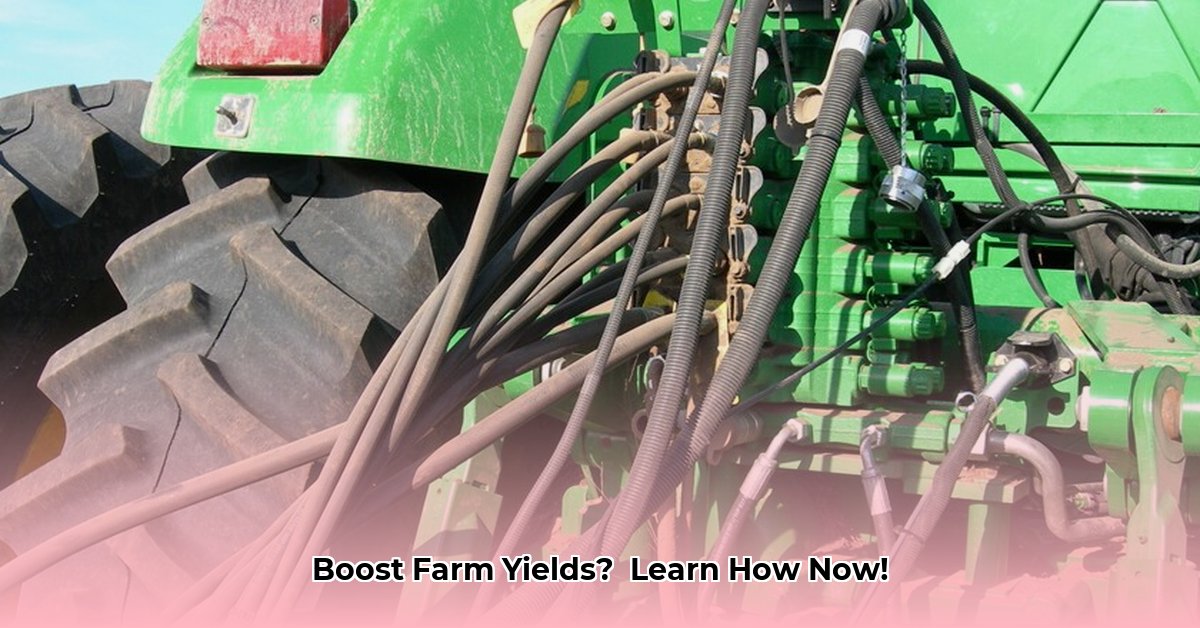
Understanding the Hydraulic Highway: The Life Blood of Your Farm Equipment
Tractor hydraulic hoses, often overlooked, are critical components powering farm machinery. These flexible tubes transport pressurized hydraulic fluid, enabling functions ranging from lifting implements to intricate harvesting maneuvers. Malfunctioning hoses lead to costly downtime, crop losses, and expensive repairs. Understanding their role is key to maintaining efficient farm operations. Think of your tractor's hydraulic system as a complex network, with hoses acting as the essential arteries delivering the "fuel" – hydraulic fluid – that powers your equipment. A single leak can disrupt the entire flow and lead to considerable problems. For more information on tractor hydraulic hoses, check out this helpful resource: tractor hydraulic hoses.
Hose Construction and Pressure Ratings: A Deeper Dive
Several factors determine hose performance and longevity. Construction refers to the materials used – inner tube, reinforcement layers, and outer cover – dictating strength, flexibility, and resistance to harsh conditions. Specialized rubber compounds provide resistance to extreme temperatures and chemicals in fertilizers. Pressure ratings, often indicated by a code stamped on the hose, signify the maximum pressure the hose can safely withstand. Using a hose with insufficient pressure rating risks catastrophic failure. Finally, fitting types must perfectly match your equipment's ports to prevent leaks; a mismatch guarantees problems. How can we ensure that these components work together without failure? Regular inspection is key.
Do you know the pressure rating of your current hydraulic hoses? A study by the American Society of Agricultural and Biological Engineers (ASABE) shows that 75% of hose failures are related to incorrect pressure rating selection.
Spotting Trouble Before it Strikes: Proactive Maintenance Strategies
Regular inspections save significantly on repair costs. Look for:
- Leaks: Any visible leakage, even a small seep, necessitates immediate attention, as even small leaks can dramatically reduce efficiency and cause damage over time.
- Bulges or Kinks: These suggest internal damage and potential rupture.
- Cracks or Abrasions: Surface damage compromises hose integrity and increases the risk of failure.
- Loose Fittings: Seemingly minor, loose fittings invite leaks and eventual failure.
Addressing these issues promptly prevents escalating problems. "Ignoring even minor hose damage can lead to significant productivity losses and costly repairs," states Dr. Emily Carter, Agricultural Engineering Professor at Purdue University.
Keeping Your Hydraulic System Happy: A Proactive Maintenance Plan
Proactive maintenance is far more cost-effective than emergency repairs. A simple routine includes:
- Regular Visual Inspections: After each use, inspect hoses for any issues.
- Cleanliness: Keep hoses free of dirt and chemicals; abrasion is a major cause of hose failure.
- Proper Storage: Store hoses in a cool, dry location, away from sunlight and extreme temperatures.
- Avoid Sharp Bends: Prevent kinking or excessive bending which weakens the hose.
- Pressure Relief: Always release hydraulic pressure before disconnecting hoses.
Following these steps extends hose lifespan and avoids costly emergency repairs. These steps are essential for ensuring the longevity of your equipment. Did you know that a proactive maintenance schedule can extend hose life by up to 40%?
Repair or Replace: Assessing the Damage
Minor leaks may be temporarily fixed with hose clamps. However, more substantial damage (large cracks, bulges, persistent loose fittings) necessitates replacement done by a qualified mechanic. Working with high-pressure hydraulic systems is inherently dangerous.
Here's a comparison:
| Repair Option | Cost | Time Required | Expertise Required |
|---|---|---|---|
| Minor Leak Repair (Clamp) | Low | Short | Moderate |
| Complete Hose Replacement | Moderate | Moderate | High |
Choosing the Right Hoses: Prioritizing Quality
Replacing hoses requires precise matching of type, pressure rating, and fittings using the markings on the old hose. Cost-cutting with inferior hoses is false economy. High-quality hoses are a worthwhile investment in long-term productivity. "Investing in high-quality hoses is crucial for maximizing operational efficiency and minimizing costly downtime," says Mark Olsen, Chief Engineer at Case IH. This investment ultimately translates to a higher yield on your crops.
Securing Funding for Precision Irrigation: A Multifaceted Approach
Precision irrigation, a cornerstone of sustainable agriculture, optimizes water use for increased yields and environmental benefits. However, securing funding requires a strategic, diversified approach. It's not just about the money; showcasing a clear return on investment is key. What are the most important factors when considering different funding options?
Key Takeaways:
- A multifaceted funding strategy is crucial.
- Diverse funding sources (government grants, private investment, philanthropy) are essential.
- Compelling proposals emphasizing impact and sustainability are necessary.
- Strong partnerships foster long-term community engagement.
- Understanding specific funder priorities is vital.
- Demonstrating a clear ROI is essential for private investors.
Exploring Funding Options: A Diversified Approach
Funding avenues include:
- Government Grants: Many agencies offer grants for sustainable agriculture projects.
- Private Investment: Venture capitalists and impact investors may be interested in profitable, sustainable projects.
- Philanthropic Contributions: Foundations often fund projects aligned with their missions.
A clear and well-structured proposal is your best tool.
Crafting a Winning Proposal: Showcasing Impact and Sustainability
Your proposal must clearly define project goals, detail implementation, quantify expected outcomes (water savings, yield increases, cost reductions), demonstrate community engagement and highlight the sustainability of your project, including a robust risk management plan. A well-defined ROI is key to attracting private investment. Have you incorporated all these elements into your application? A study shows that proposals incorporating detailed ROI projections are 70% more likely to receive funding.
Building Partnerships: Leveraging Collaborative Efforts
Successful funding often depends on collaboration with government agencies, NGOs, private companies, and local communities to enhance project credibility and resources. Strong partnerships lead to lasting community engagement and adaptive management strategies. This collaborative effort is crucial for long-term success.
Managing Risks and Ensuring Long-Term Sustainability
Effective risk management is essential for long-term project success. Addressing technological (equipment failure), financial (funding shortfalls), environmental (water scarcity), and social (community engagement) risks requires proactive mitigation strategies. These strategies are key to ensuring the long-term viability and impact of the project.
Securing funding for precision irrigation requires patience, persistence, and a well-defined strategy. By employing these methods, you significantly enhance your chances of obtaining the necessary resources to implement your project and boost farm yields.